
The excitement of being here sends a rush of energy through my body, the kind that wakes up my feet again and pushes me through the aches of long travel. With luggage rolling behind me and my bag gripping my shoulder, I fast paced my way through customs and managed to escape without being stopped this time.
Through the arrivals doors, the scene unfolds the same way it does in every corner of the world. Patiently waiting family members, handmade welcome signs, and the fleeting disappointment on faces that realize the person stepping out is not the one they were hoping for. I move through the crowd, searching for the face that reminds me of home, the one tied to the place where all of this began for me. Then I see it. The familiar crinkled eyes meet mine, and my breath catches with another wave of energy. This one carries the relief and warmth of greeting someone who has been part of your journey. The truth is, I have been lucky. Lately, I seem to find friends in the places I choose to explore alone.
Once you walk through the visitor gates, the mother city greets you with a message that feels both bold and personal. Literally, there is a sign that reads, Welcome to the Mother City.
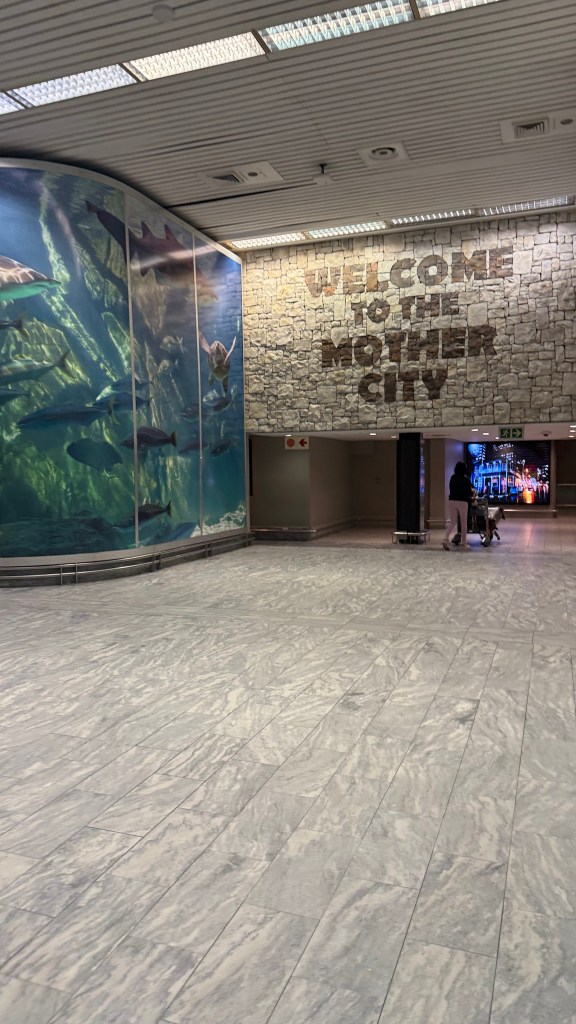
For someone whose ancestry traces back to somewhere in Africa, although I have never been interested enough in DNA kits to know where exactly, the welcome feels like an embrace your ancestors have been waiting to give you. Maybe it is the influence of the Yoruba beliefs my family grew up hearing, maybe it is simply the power of this place. But let me reel it back in. Cape Town earns its name from being the first official settlement in South Africa in 1652, founded by the Dutch. I fact checked. I even asked a local. Do not come for me.
Stepping outside again, I get a welcomed reminder of how incredible the weather in Cape Town can be. Mid August is usually the tail end of winter here, but somehow I was blessed with clear skies, sunshine, and that perfect late sixties temperature that feels like a soft introduction to the city. Still, do not be fooled. Pack jackets and coats. Evenings can turn brutally cold, although not snowy, so relax. And the wind will try its best to give you whiplash if you are not prepared. Layers are your best friend, especially if you plan on hiking, but I will tell you more about that soon.
Before heading into the city, we stopped to eat at a restaurant called Ocean Basket, a simple place with patterned tables, bright light, and the kind of easy atmosphere that invites you to sit down and breathe. Hunger hit me, of course, but more than anything, there was excitement. The travel jitters had not settled yet, and this was the first moment in more than thirty hours when my body finally slowed enough to understand that I was truly here, in Cape Town.
The hostess asked what we wanted to drink. I answered with a quick “water,” rolling my r the way I always do, and she paused, trying to place it. My friend gently repeated it for me, which turned into the familiar question, where are you from. He explained that I am Cuban but live in Florida now, and he added that he is from here. The exchange was warm and easy, the kind that reminds you why food is often the first welcome a place gives you.
A few minutes later, another server approached with a curious expression. He said he had heard I was from Florida, and I told him yes. He mentioned that he had worked in a small town north of South Florida about six years ago and that maybe I would not know it. I asked which town. He named a city that is a short drive from where I live. At that same moment, he explained the work he did there, work that just happens to be at the same company where my friend, sitting across from me, currently works.
My friend looked at me and shook his head in disbelief. The server stood there repeating no way, seriously, like even he could not believe it. The coincidence felt too sharp to ignore, the kind of alignment that makes you look around for a hidden camera.
We ordered a platter of seafood, fish and prawns and calamari seasoned exactly the way my island taste buds prefer food to taste. Nothing bland, nothing muted, just flavors that carried a sense of home in a place that was still new. As we ate, the three of us kept circling back to the same thought. Of all places, all restaurants, all possible exchanges in South Africa, we had landed in one that connected so closely back to my life in Florida.
To me, it felt like a quiet confirmation that I was exactly where I was meant to be. Sometimes the world folds in on itself just long enough to whisper that your path is aligning and that you are living the timeline intended for you. This was one of those moments.
The drive from the airport into the city is nothing short of awe. To me, it is also another surprising reminder of Cuba, a comparison that will return again and again throughout this trip. Along the route from the airport toward the city center, you pass the Cape Flats, a wide stretch of land where many informal settlements are located. Neighborhoods like Nyanga and Khayelitsha appear along the way, rows of tin structures that locals often call tin cities or squatter camps.
It is a brutal sight, not for its unfamiliarity but because of how familiar it feels. It carries the same ache as the neighborhoods we were taught to avoid as kids, the same echo of poverty shaped by history, struggle, and systems that cracked long before we were born. In Cuba, façades were sometimes painted fresh, yet the truth behind them remained unchanged. Here, even in the weight of these realities, you still find stores with affordable food, small glimpses of what my island could have been if circumstances had shifted.
This is not a political view. It is simply the outpouring that rises when a place mirrors something you once lived. Some landscapes touch memory before they touch imagination, and this was one of them.
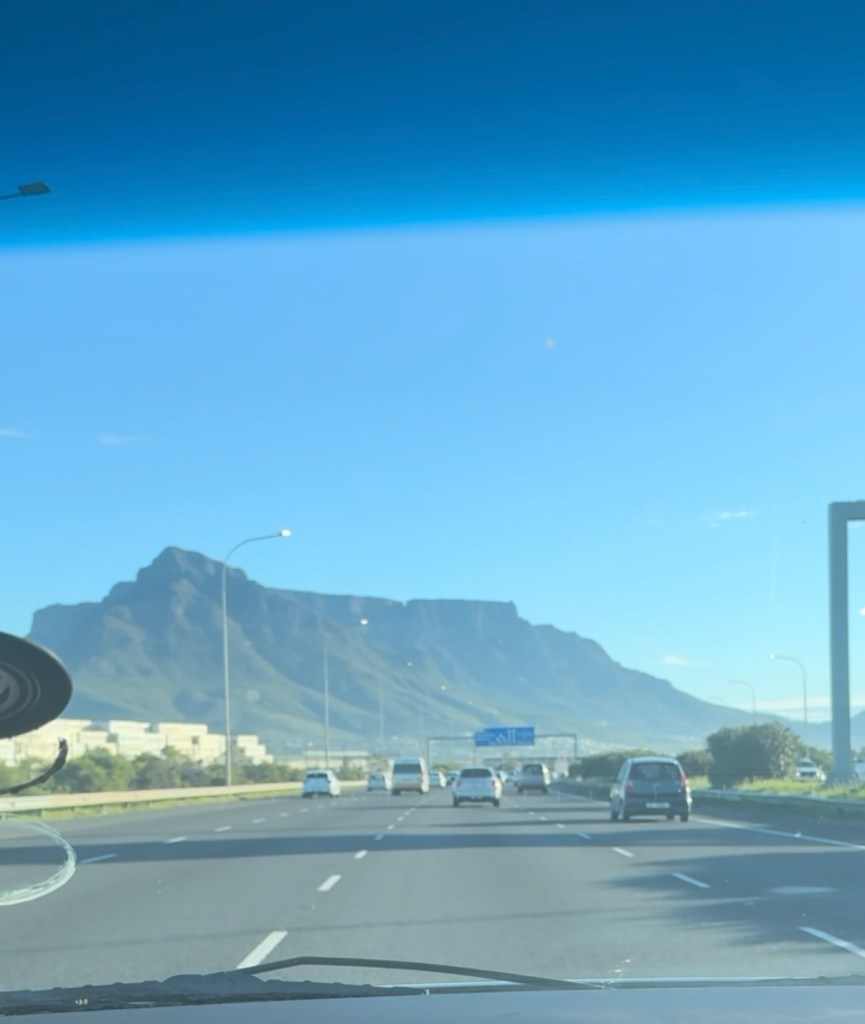
As the highway curves and the city begins to rise in the distance, the landscape shifts into something entirely different. The flat stretches of tin and dust fall behind, and suddenly the mountains appear. It happens almost without warning, the way the earth lifts itself into these enormous silhouettes that seem to hold the sky in place. Table Mountain stands at the center of it all, its outline sharp against the light, so still that it feels almost unreal.
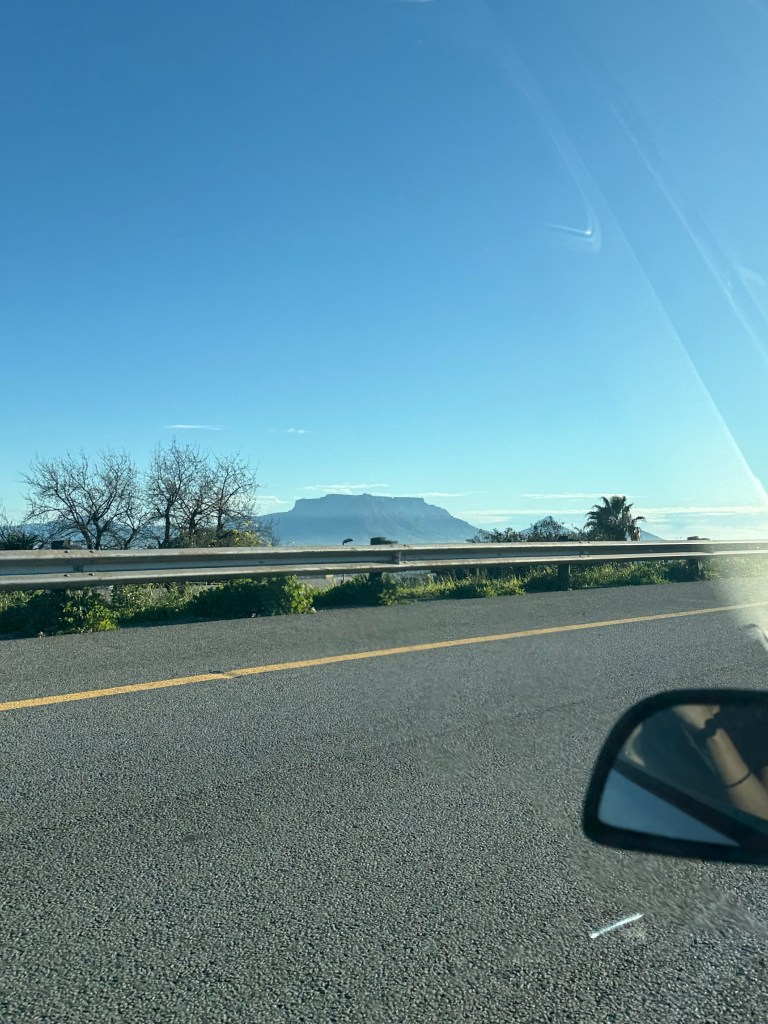
This was the first moment I understood why people talk about Cape Town the way they do. The way the mountain sits there, watching over everything. The way the city grows around it like it has always belonged at its feet. I pressed closer to the window, trying to take in every detail, every shadow, every shift of color. It felt as if the entire drive had led to this single view, the one that finally makes you stop thinking and simply breathe. Every journey has a moment when it stops being a trip and becomes a story you will carry. For me, this was that moment. Cape Town had finally opened its hands, and I was ready to step inside.
 echoes of elsewhere
Leave a comment